Swipe (UCLA)
 ...
...
Swipe (UCLA)
💡 Concept
Provenance is not a region in France, famed, perhaps, for sniffy cheese or crusty baguettes. It is, instead, a distinctly French term (with a nasal ã, achieved by plugging your nose) for who owned it, when, where, and just occasionally, why. If you want to make it someday as an art historian or museum curator, you need to master continental pronunciation of italicized vocabulary, just as you need to develop infinite patience for details of an artwork’s whereabouts at any given time, lest it surprise you as forgery or be stolen by thieves. The record of ownership is a critical form of information, or metadata, upon which we hang other important details, such as attribution (who created it), subject (who or what it depicts), value (what art dealers care about most of all), and significance (what’s left over for the rest of us). But let us suppose, instead, that your life’s path leads not to art history as vocation, but to history without the art. What use do we make of pictures in that case, if our principal concerns are what happened and when, and our sources of information rank as primary, secondary, and tertiary in order of subsequent remove from events as we imagine them to have occurred?
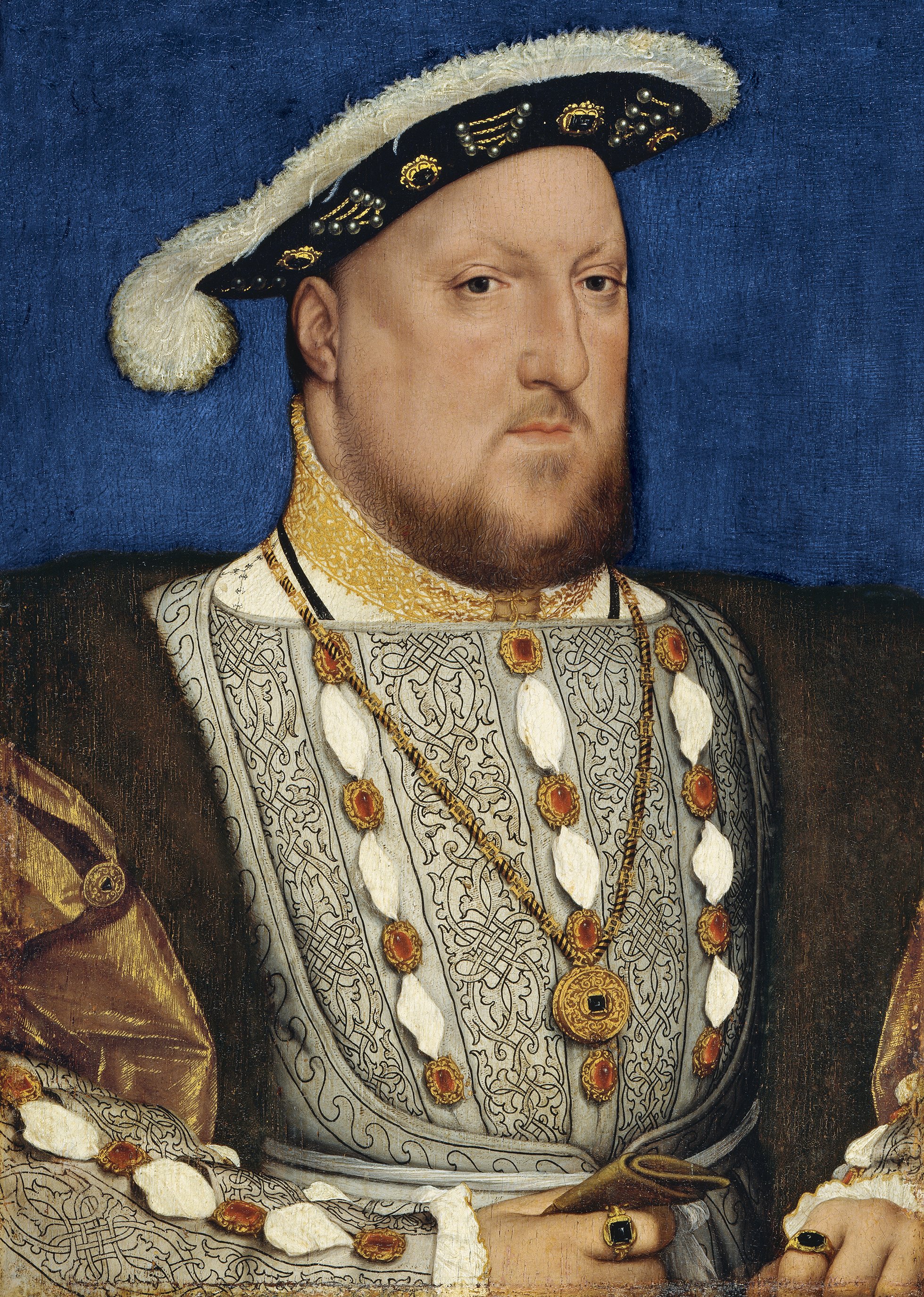
Take a look at these: on the left is Henry VIII, King of England, in a portrait by Hans Holbein the Younger, and it can be viewed in person at the Museo Nacional Thyssen-Bornemisza in Madrid (or on their website by clicking on his mug). On the right is Anne of Cleves, who would become Henry’s 4th and hardly his last wife. This painting is also by Holbein, and it hangs today in Le Louvre, of all places, a museum in Paris (pronounced like “loo”). Using current information technologies by analogy, our job is to determine if they were a good match.

Swipe
The founders of Tinder mythologize its most seminal contribution to history, the swipe. Pronounced in clinical American (rhymes with "wipe"), this term refers to the technique by rapid forefinger flick of signaling a suitor’s suitability by virtue of appearance: with elegantly simple gesture, swiping left consigns one to oblivion, while swiping right offers reprieve for further interrogation. Tinder tinkerers knew in their hearts that even kings think with organs other than the brain. Henry had already ruffled through several wives like a hand in a bag of crisps, quickly and not satiated: “what’s one more?" the hand asked. The better question would come nearly a century late: is beauty only “skin deep”? By 1539, King Henry found himself awkwardly divorced, annulled (with beheading) and widowered with child, and he was on the market yet again for another wife.
What could the European Renaissance offer? Da Vinci hadn't thought up dating apps, but Henry had his Holbein. The Swiss artist was treasured, literally, for his life-like portrayals, and he visually recorded the likes of Erasmus, Cromwell, and Sir Thomas More (not to mention Henry and his beloved son Edward) with near-photographic realism. Too busy to crawl the pubs himself, Henry dispatched his favorite portraitist to the Duchy of Berg to take a few snaps of a hot prospect, Anna von Kleve. Cromwell's big idea, now that Henry had an heir, was to build up his royal network on the mainland. The only question: was she pretty?
Judging by her headshots, she was: Henry swiped right and shipped her over to England to wed. Upon Anne's arrival in the flesh, however, Henry viewed her askance. You made her look good, he told Holbein, but married her anyway. A couple months passed, Henry swiped left, and Cromwell lost his life. But the clever Anne survived, and embraced the remainder of life's challenges head-on.
🖥️ Activity
For this hands-on Bruin Learn lab activity, we will apply our visual-analytical proficiency to extract significance from a selection of cultural artifacts understood as historical evidence. Using the technical affordances of museum-quality imagery provided in the IIIF (pronounced "triple eye eff" and standing for International Image Interoperability Framework) format, we will closely inspect, then crop and share details of our choice in this discussion forum with brief reflective commentary about subject matter and method.
We will collectively consider the particular usage scenario in which paintings didn't just passively decorate palace or museum walls, but served an active function of state. They were created remotely and shipped about as tools of diplomacy or king-making. Holbein's portrait of Henry (above), for example, wasn't sent to Anna von Kleve as a selfie (to be fair), but it was sent to Henry's French frenemy, King Francois I, just to flex. Such transitory images were made small to be portable, and sometimes miniature, depending upon the skillset of their artists. Now that their initial purpose has been served, they remain with us to consider...
Thinking like a Henry
- Was she pretty?
Thinking like an historian:
- what do we make of artifacts that go beyond accurately recording or transcribing events after they occur to arguably causing them?
- Are they still primary sources, in the manner we have come to understand them, or do they deserve their own category of information?
- What questions can they address?
- What makes them interesting or important, if at all, in the history of Tudor England, given the personal likes and dislikes of its heaviest hitter, King Henry VIII?
For reference, you are welcome to revisit our textbook Death and Disorder, pages 39-40 and any other sources.
👓 Examples
In the zoom-box below (called a Mirador viewer) is a miniature portrait also painted by Holbein, as a companion piece to the larger wall painting on panel above. Zoom in to see details. Click the "hamburger" menu icon in the upper left corner of the viewer and read the description and metadata for context and material grasp of the object. Note that the viewer presents multiple images of the item. Look at all of them and reflect on the various ways through time curators have kept track of visual and material information. Visit the item page on the Victoria & Albert Museum online collections page for additional insights.
🧱 Materials
Copy the item manifest URL here to paste into the Cropping Tool below
https://iiif.vam.ac.uk/collections/O18966/manifest.json
🛠️ Tools
🪜 Steps
d100; color: #000000;” aria-hidden=”true”></i>Steps</h3>
To crop an image detail
- Copy and paste the IIIF manifest URL of the item into the top bar and click SUBMIT
- Select and click any thumbnail to load in the viewer
- Zoom and view the item page
- To crop a detail from the image, click the white pencil icon, and highlight the desired portion by clicking and dragging a rectangle from corner to corner
- A thumbnail of your selected detail will appear in a slider at the bottom of the Cropping Tool. You can repeat to collect multiple details.
- Click on the thumbnail of any detail to generate an image URL or HTML embed code, which you can choose, by clicking their respective buttons. Select Full
- Click Copy to copy the URL
To add image details to a post
- to create your post, click Reply at the bottom of the screen, and a text editor will appear for you to compose your post
- to enter your image details, click the icon for "images" near the center in the text editing toolbar
- in the Upload Image popup, select URL, and paste your URL in the File URL blank. Briefly describe your image detail for Alt Text (for the visually impaired), and click Submit.
- repeat for additional images
- type or paste in your in your commentary
✉️ Share
Submit a brief (3-4 sentences) reply in this forum with 2-3 image details addressing any of the following prompts:
- How do you think imagery as a form of communication in the Tudor period relates to that of our own day?
- What do you think Henry saw in common with Anne of Cleves, based upon this image and the two portraits above (including tastes in clothing, accessories, facial expression)?
- Considering royal portraiture here and preceding images of Richard III and Henry VII, what value do you think they have as evidence for historians, amateur sleuths, and the general public for understanding Tudor England?
- What do you find of interest in their images and story that you would like to share?
🤝 Collaborate
Please feel free to read and reply to posts by your peers.