EKPHRASIS ACTIVITY (CROPPING TOOL)
 Students are introduced to the practice of "Ekphrasis" to practice "reading" an image/photograph.
EKPHRASIS ACTIVITY (CROPPING TOOL)
💡 Concept
This activity will be completed in class on ______.
"Ekphrasis," comes from the Greek word εκφράσεις, which is a literary or rhetorical description about a visual artistic work, like "Ode on a Greek Urn", by John Keats: https://www.poetryfoundation.org/poems/44477/ode-on-a-grecian-urn
Generally it can be applied to any activity that "translates" visual information into verbal.
Even though there are schools of criticism that emphasize a seemingly rivarly between visual and written arts, there are artists who prefer to cross the border/ the limit that separates them. We are going to be using "cross pollination", questioning the categories of "drawing" and "writing".
Below you can find images related to the topics we have recently discussed.
🖥️ Activity
Here we are going to use the practice of Ekphrasis in a relatively straightforward way, as an academic practice fundamental for visual description. Think about it as reading an image/photograph.
It can be an interesting and insightful process that requires careful observation and analysis. Here are some instructions that can help you:
-
Take a moment to look at the image/photograph and identify what it is showing
. Is it a portrait, landscape, or a still life? What are the main subjects in the photograph? What is the setting?
-
Analyze the composition.
Look at the placement of the subjects and how they are framed within the image. Pay attention to the use of lines, shapes, patterns.
-
Consider the lighting.
Is it natural or artificial? How does it affect the mood and tone of the photograph? Does it create any shadows or highlights that add to the composition?
-
Consider the context
. What was happening at the time the photograph was taken? Who took the photograph, and why? What message or story is the photograph trying to convey?
-
Pay attention to the details.
Are there any subtle elements that you might have missed at first glance? What do these details add to the overall composition and meaning of the photograph?
-
Finally, think about your own interpretation
. What emotions or thoughts does it evoke for you? How does it make you feel, and why?
Remember: reading a photograph is a subjective process, and everyone may interpret it differently. These instructions can help guide you through the process, but ultimately, it is up to you to make your own meaning.
🧱 Materials
IIIF Photographs & Works of Art
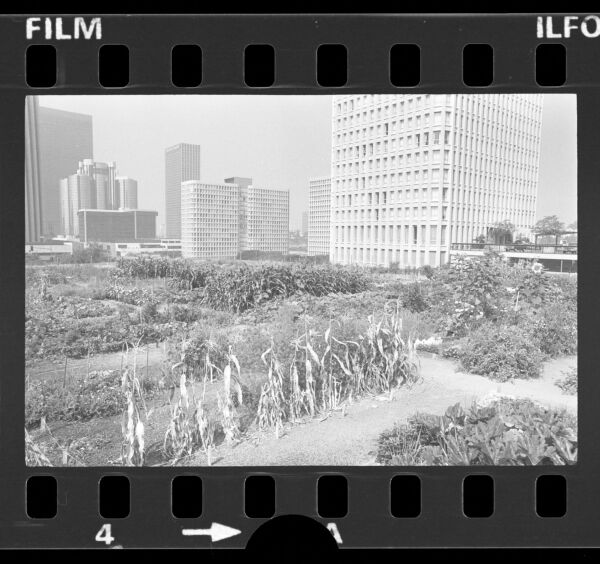
"Urban Garden"
https://iiif.library.ucla.edu/iiif/2/ark%3A%2F21198%2Fzz0002r4j7/full/600,/0/default.jpg
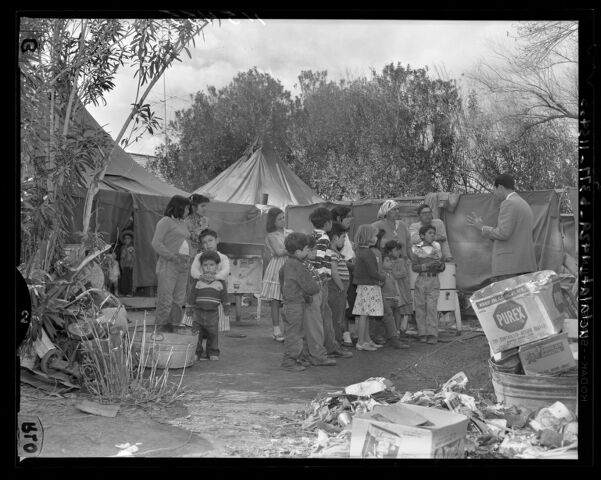
Santos Family: "Migratory Farm Workers- Tent Camp":
https://iiif.library.ucla.edu/iiif/2/ark%3A%2F21198%2Fzz0002q5wf/full/600,/0/default.jpg
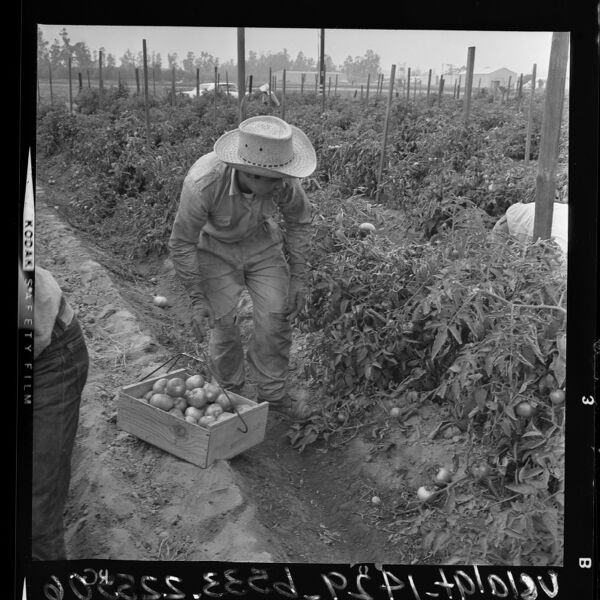
"Bracero"
https://iiif.library.ucla.edu/iiif/2/ark%3A%2F21198%2Fzz0002spdb/full/600,/0/default.jpg
"Farm workers- watercolor"
https://iiif.library.ucla.edu/iiif/2/ark%3A%2F21198%2Fzz002k6hd8%2Fgt50qt2z/full/600,/0/default.jpg
"Japanese Agricultural workers in Burbank California"
https://iiif.library.ucla.edu/iiif/2/ark%3A%2F13030%2Fhb9q2nb6nw/full/600,/0/default.jpg
"Family of four working on a strawberry field"
https://iiif.library.ucla.edu/iiif/2/ark%3A%2F21198%2Fzz0002ps1r/full/600,/0/default.jpg
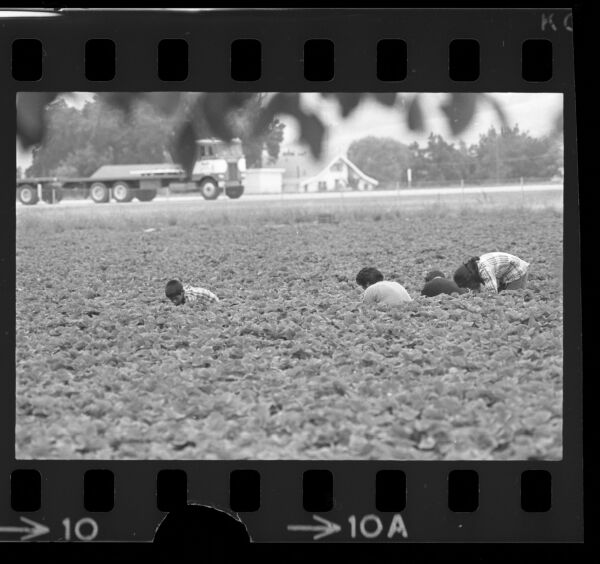
"Farm workers- brush fire"
https://iiif.library.ucla.edu/iiif/2/ark%3A%2F21198%2Fzz0002r5sb/full/600,/0/default.jpg
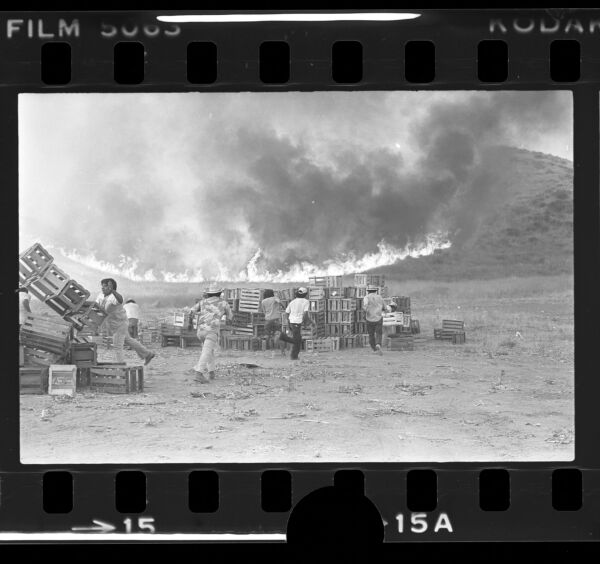
"South Dakota Sioux Indian Men picking strawberry- fields Calfornia"
https://iiif.library.ucla.edu/iiif/2/ark%3A%2F21198%2Fzz0002tf27/full/600,/0/default.jpg
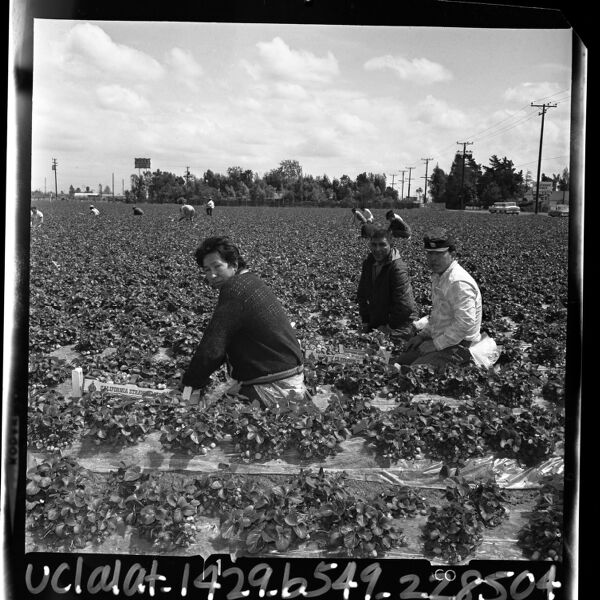
"Unauthorized immigrants"
https://iiif.library.ucla.edu/iiif/2/ark%3A%2F21198%2Fzz0002rzkb/full/600,/0/default.jpg
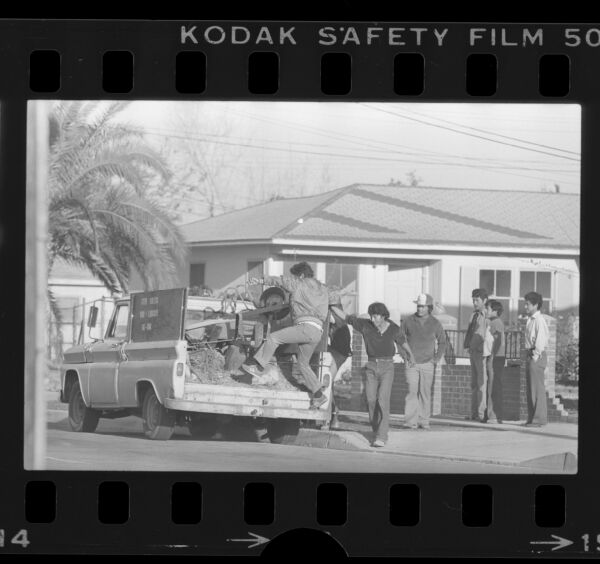
"Los Angeles Latino Families Photo Project"
David Alfaro Siqueiros ("Self Portrait","Portrait", Mexico City Mural, Untitled,"Fuego", "Dama Negra"
Nancy Tovar - Photographer - (Murals of East Los Angeles Collection)
🪜 Steps
IIIF Image Cropping Tool
Once you have selected a IIIF image. You can use the tool below. The cropping process is somewhat technical, but it can be easily mastered with patience following these steps:
- copy the first IIIF URL or find the IIIF icon (right click on it and choose " Copy Link address" ) from the list of Resources above , and paste it into the bar "Enter the URL or a IIIF manifest" and click Submit
- Take a few minutes to look at the photo and take in its details. I encourage you to think about what it might be trying to convey, and how it makes you feel.
- click on the pencil icon to select a detail-fragment of the image (adjust the corners of the cropping box until it isolates the detail). Notice that the box is "size-sensitive", so please choose a medium-to large size fragment so the image is clear in your reply.
- once you are satisfied with the positioning and size of the detail, look for the automatically generated HTML of your detail in the gray box. Select it all and copy it.
- Finally, click on "reply" below, click on the </> button and paste the HTML code . Then, write a 80-100 word description of what you see, and it does not need to be formal, or comprehensive. You can use the IIIF images I have chosen for you or you can look for your own in https://digital.library.ucla.edu/, as long as you embed a IIIF image (detail) with your written response.
- Resize it as needed.
✉️ Share
Share the image crop out that you created and write the brief post: what do you see in the image detail? What does it mean to you, or what about it might others find interesting from your perspective?
🤝 Collaborate
Once you have sent your post, take the time to look at your classmates' posts and comment to at least one emphasizing similarities, or connections you see between the details you selected.