Paragone Debates - Drawing and 3D Scanning
 ...
...
Paragone Debates - Drawing and 3D Scanning
💡 Concept



"David and Goliath" 1550-1555 (site views at The Louvre museum, recto and verso)
The term paragone ("comparison") emerged in an art-historical context from epistolary debates about the relative merits of aesthetic qualities of painting, sculpture, and poetry (as well as architecture, to an extent), during the Renaissance period. Bendetto Varchi (Italian poet, 1502-1565) sparked the conversation in 1546 through letters to cultural practitioners inviting their opinions on the matter. Among them, painters and sculptors, particularly, addressed comparisons of their two respective art forms from conceptual themes to practices and championed their own forms of art as superior to, and distinct from, the other.
- Painters emphasized the supremacy of sight and their ability to render color and texture to create the illusive perspectives that yields greater potential for naturalistic representation. They also boasted of more liberty in playing around with the objects or figures, reshaping, overstretching, geometricising, dissolving, caricaturing, or meandering, according to the painting's intended effect.
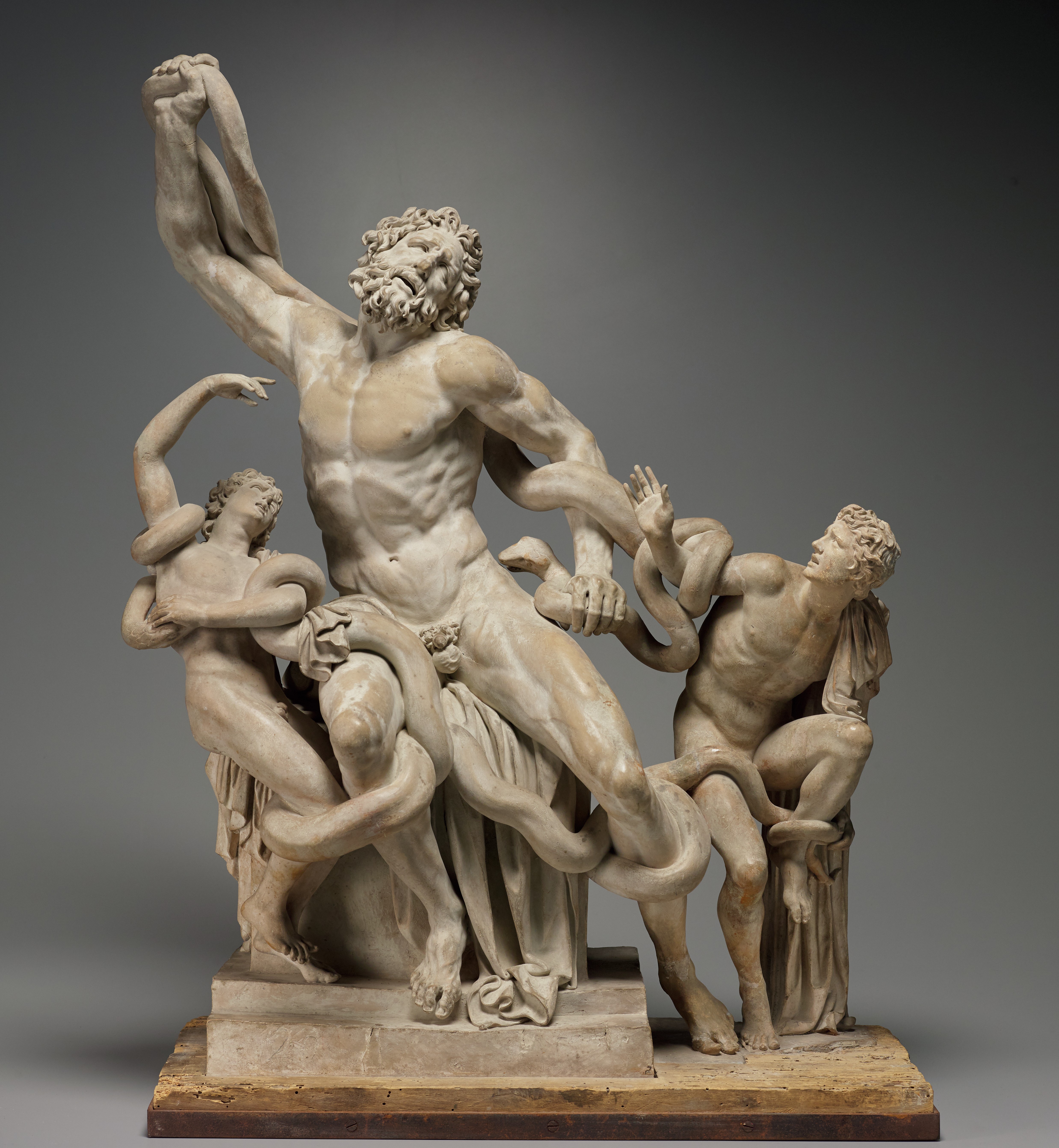
- Arguments in favor of sculpture focused on its three-dimensionality, which can better access depth and volume and could be viewed from multiple angles, a method allowing several different and faithful views of the same figure. Since the Renaissance artists attempted a "rebirth" of the culture of classical Greek and Roman art, they often did so through employing the same subject matter or by grappling with technical challenges presented in an antique work, such as representation of contrapposto ("counterpoise," describing a human figure standing with most of its weight on one foot), like in Michelangelo's statue of David, to express a psychological disposition; or representation of figura serpentinta ("serpentine figure"), like in the Laocoön and His Sons and Rape of a Sabina, featuring figures in a spiral pose that creates more dynamic in showing physical power, passion, tension, and semantic movement.
The essential point in the debate to both painting and sculpture, however, lay on the notion of disegno ("the conception of a work"). It led to the influential idea and practice that drawing excels observation of all manner of things and serves as the foundation of all art forms.
🖥️ Activity
Paragone Debates discussion and 3D scanning of the hands with Doug Daniels at the Lux Lab in YRL.
📍 Location
The Lux Lab at YRL.
🧱 Materials
"Renaissance Paragone: Painting and Sculpture." Oxford Art.
Scanned
- Skeleton Hand
- Live hands (open and clasped)
- Live hands (closed and clasped)
- Fist
- A cadaver's prosected left arm from elbow down to the hand (with annotations)
- Model Teeth (IIIF)
✉️ Share
Read "Renaissance Paragone: Painting and Sculpture." Oxford Art. and compare your experience in the drawing lesson in the previous week with the 3D scanning at the Lux Lab. Reflect on what you have learned from these two methodologies in the representations the human body in the course of history and comtemporaily.
Post by May 20.
🤝 Collaborate
Give feedback to your peers by May 22.